The art, science, and fun of assessing forest health
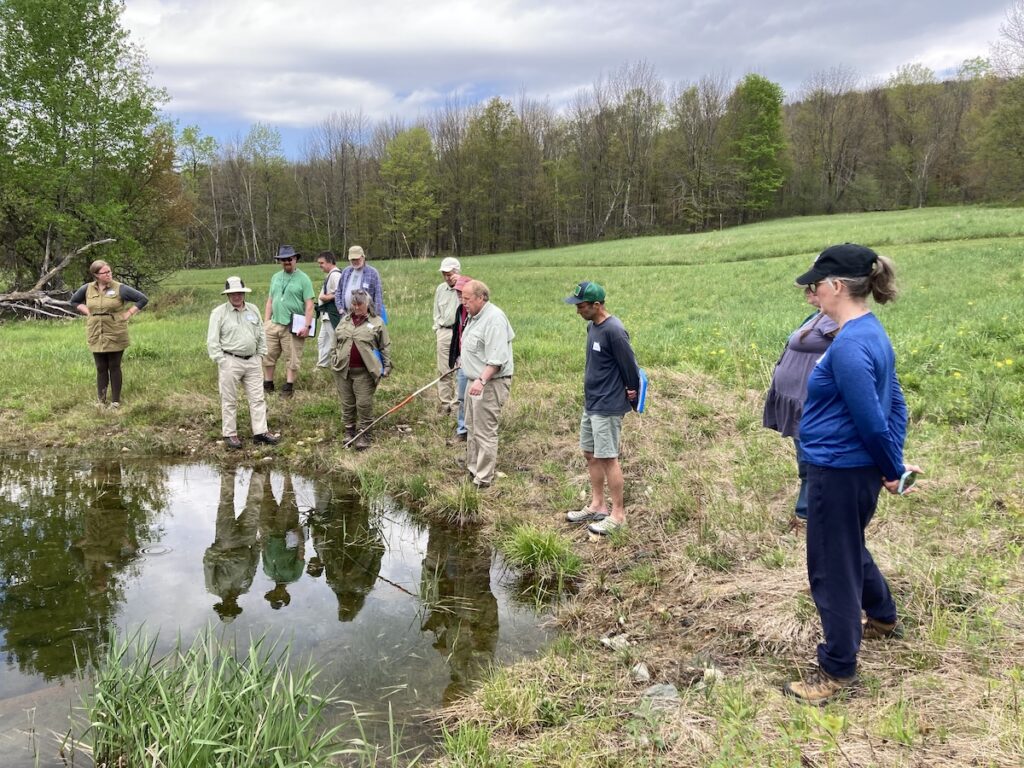
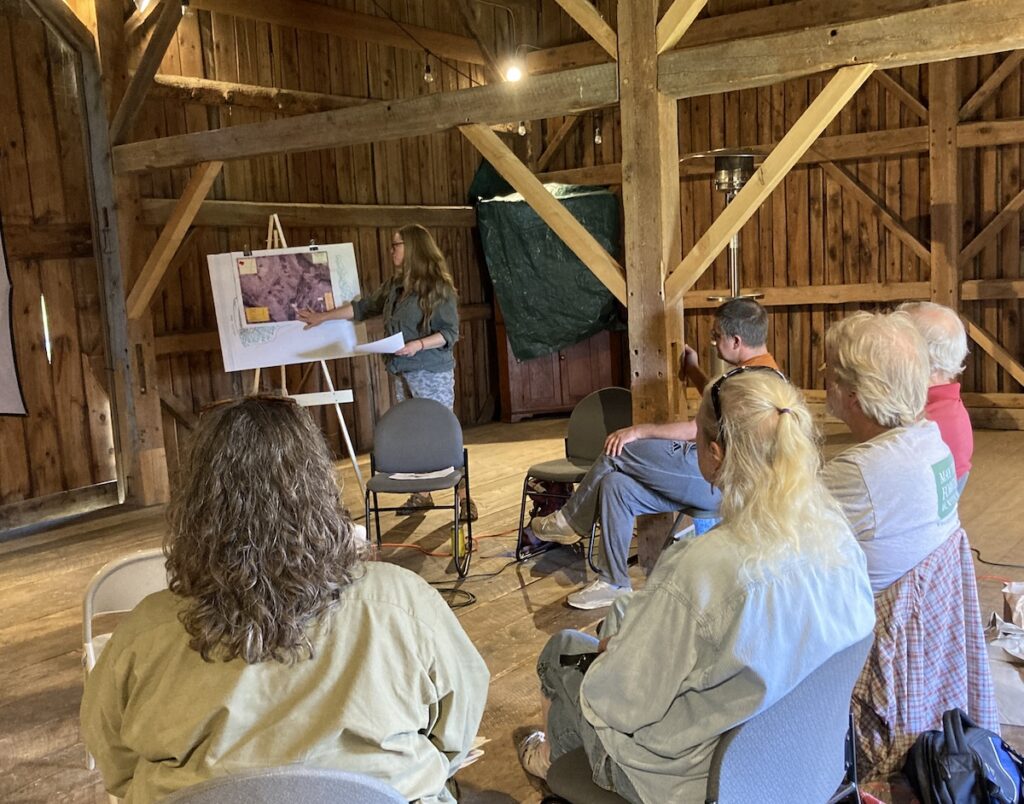
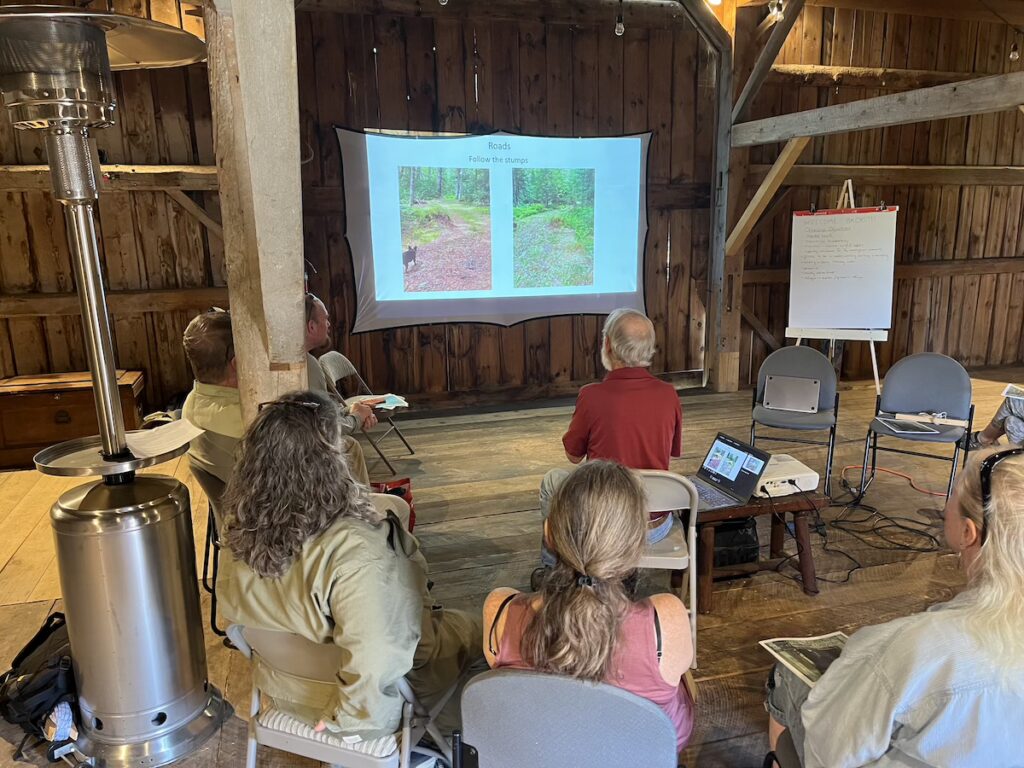
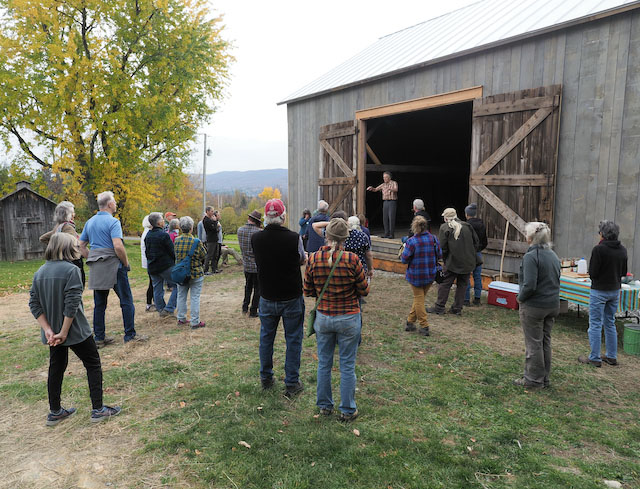
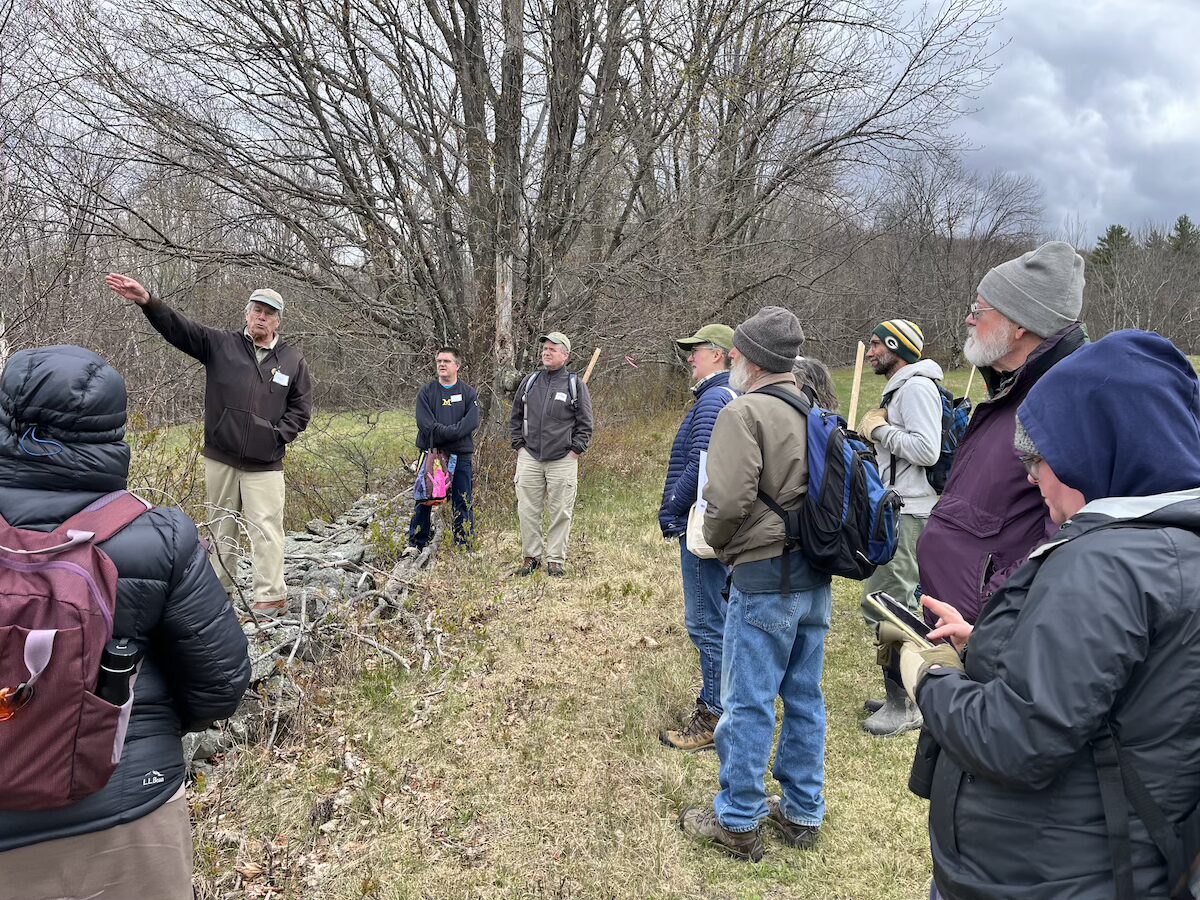
How can you tell if your forest is healthy, and what can you do to contribute to that health? What are the key indicators of forest health? On a crisp, late-April morning this past spring, 10 intrepid students gathered in the Middle Barn of Vermont Family Forests’ Wells Farm in Lincoln to explore these questions and more in a two-month, hands-on course.
Vermont Family Forests created the Family Forest Conservationist Training course to test our premise that, with low-tech tools and self-guided instruction, a landowner can get to know their forest more intimately, collect data to evaluate the forest’s health, and respond to what they learn with actions that contribute to the forest’s innate ability to maintain and restore its own health.
The course was part of our ongoing effort to empower landowners to understand and engage with their forests, rather than giving over that relationship to a consulting forester. In other words, why let consulting foresters have all the fun?
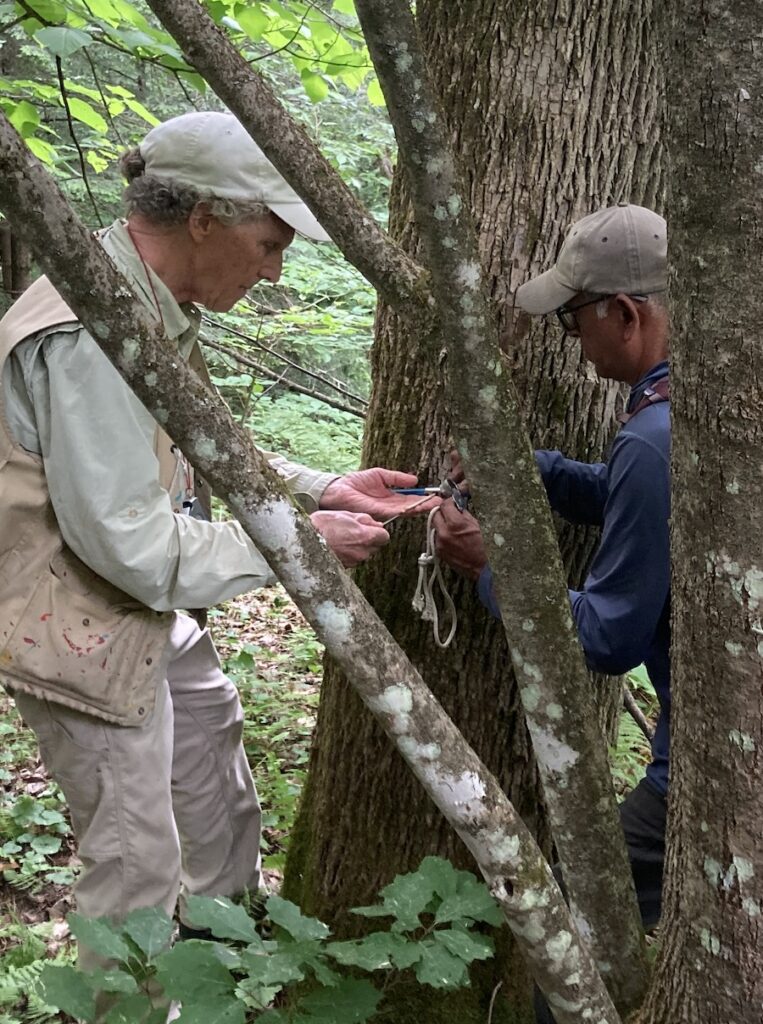
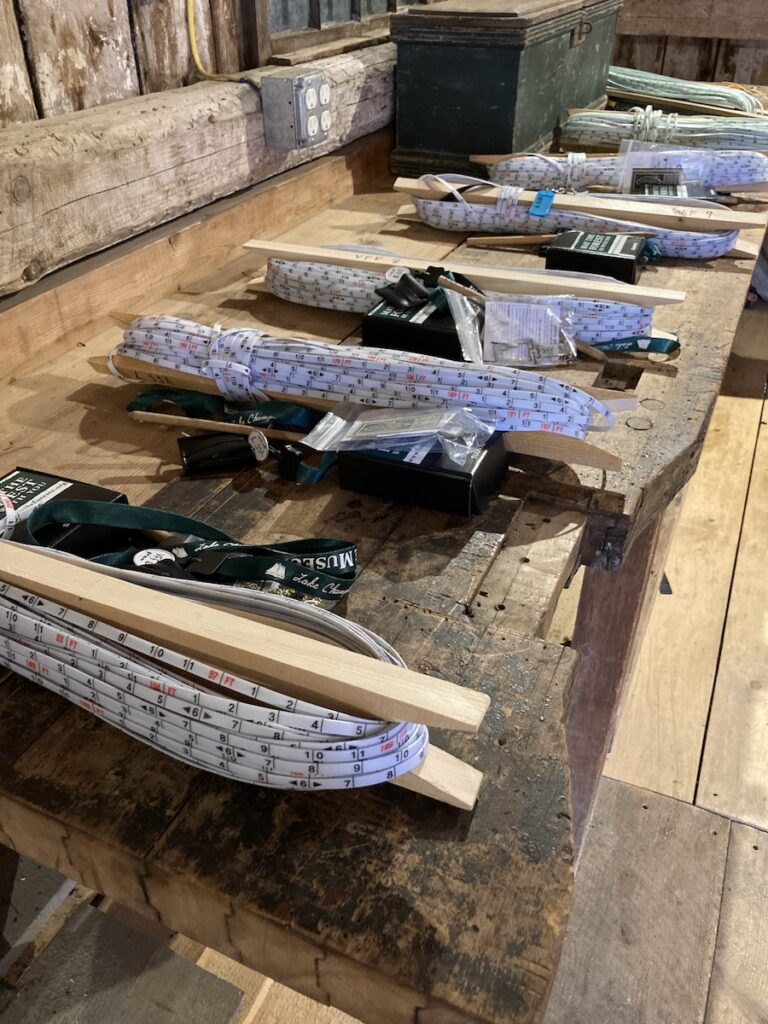
In exchange for a cost-free course, we asked students to earnestly kick the tires of our Family Forest Health Check, a guidebook to assessing 10 benchmarks of forest health. For the course we created a lending library of tools that students checked out for the duration of the course, including clinometer (for measuring land slope and tree height), 200-foot surveyor’s tape (for measuring distance along access paths), 10-factor prism and/or angle gauge (two tools for assessing basal area and trees per acre), and a clear plastic grid for assessing canopy closure. We gave each student a VFF cruising stick to keep (used mainly to measure tree diameter in our workshop, though the stick measures a lot of other useful things, like log volume, number of 16’ logs per tree, and such).
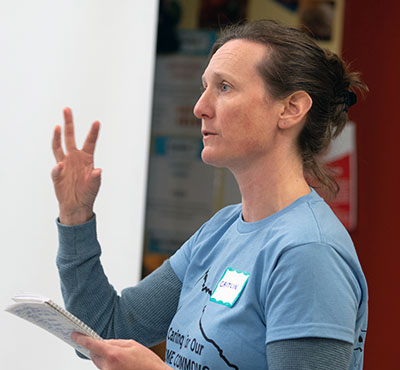
That April morning, students picked up their tools, along with a bound copy of the Family Forest Health Check and a field clipboard for storing and recording data sheets. Before heading into the woods to learn how to use some of the tools, students introduced themselves to each other and to their main instructor, VFF executive director and conservation forester David Brynn. Participants hailed from as nearby as Ripton and Monkton to as far afield as Braintree and Orange, with forests ranging from 10 acres to several hundred. Some students had extensive knowledge of trees and forest ecology; others were just beginning that learning process. All voiced a passion to learn more about their forests.
Over the course of six four-hour sessions between late April and the end of June, students learned the basics of assessing 10 benchmarks of forest health. We knew from the outset that there would be much that we couldn’t cover in so short a time, but hoped that the Family Forest Health Check, combined with the additional reading materials and resources that we or the students themselves recommended, would fill in the gaps. Time would tell!
Below are the 10 benchmarks of forest health that we explored:
- Native Tree Diversity. Tree species richness reflects a diversity of trees native to the forest’s natural communities.
- Non-native Tree & Shrub Species. Non-native invasive tree and shrub species (aka plants from away) are absent.
- Legacy Trees. There are a minimum of 6 live, wind-firm legacy trees per acre exceeding 20” diameter at breast height (DBH).
- Snag & Cavity Trees. There are a minimum of 8 large, secure cavity or snag trees exceeding 15” DBH per acre, with 4 of them exceeding 20” DBH.
- Large Downed Wood. There are a minimum of 8 downed trees or 16-foot-long logs exceeding 15” DBH per acre on average, with 4 of them exceeding 20” DBH.
- Small Woody Debris. Following tree harvest, branches less than 3 inches in diameter remain in the forest, and away from streams.
- Buffers for Ecologically Sensitive Habitats. Special habitats such as cliffs, caves, talus slopes, beaver meadows, vernal pools, seeps, rare natural communities, and remnant old growth forest are intact and effectively buffered.
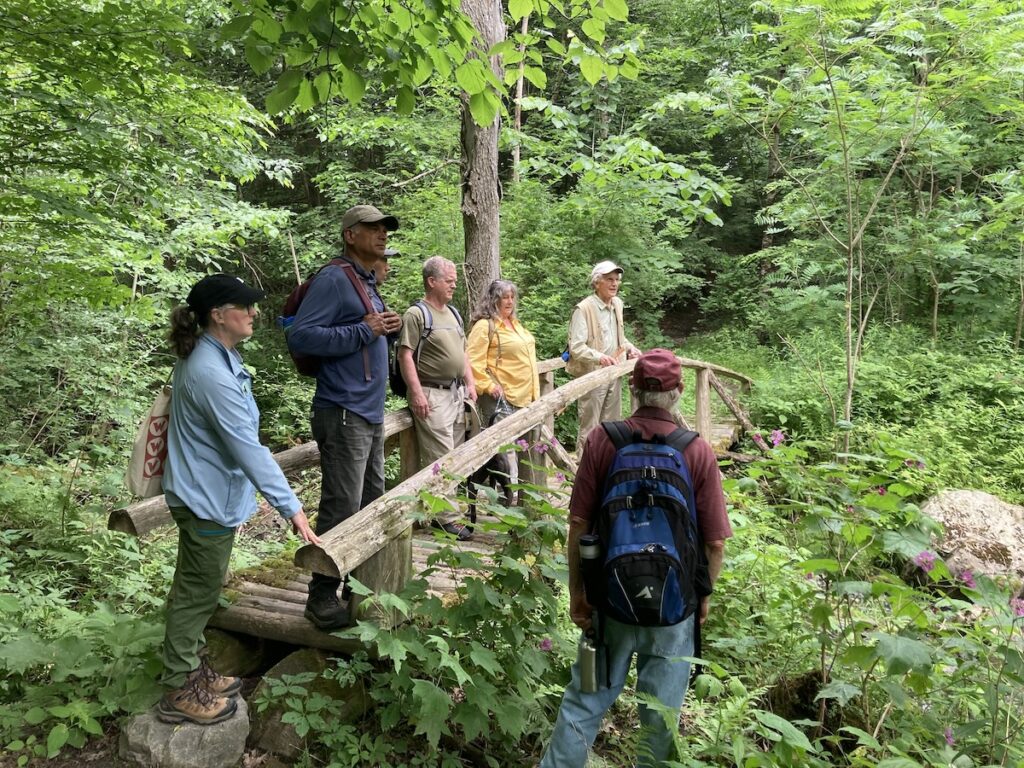
- Riparian buffers. All streams are effectively buffered, have little or no bare mineral soil or ground disturbance, and have at least 85% crown closure.
- Stream Crossings. Streams are crossed with bridges or open-bottom culverts that are properly sized according to Table 2 in the Vermont Water Quality Acceptable Management Practices manual (AMPs) carefully installed perpendicular to the stream, and regularly maintained.
- Forest Access Network. All forest access paths, skid trails, and log landings occupy 5% or less of the forest and have properly installed and maintained erosion control structures, in compliance with Table 1 of the Vermont AMPs.
Our premise, in developing this suite of benchmarks, is that if a forest meets these criteria, there’s a very good chance that it is healthy and resilient. If the landowner discovers that their forest doesn’t meet one or more of the benchmarks, they have information that can inform future decisions in your interactions with the forest.
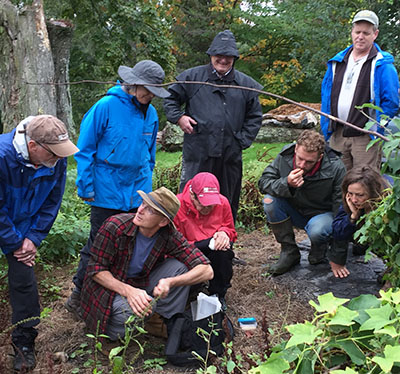
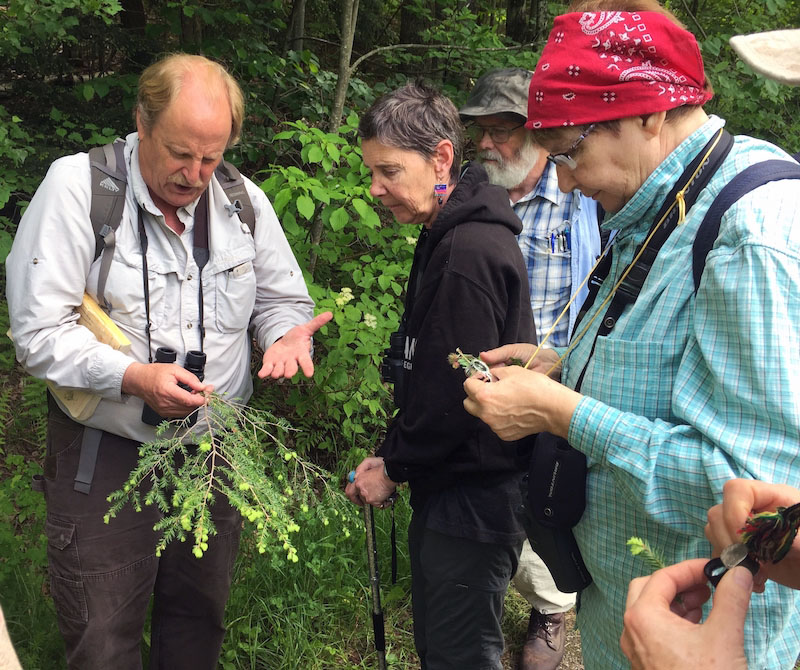
So, that’s where the course began. For each session, we invited local experts to share their insights about the subjects at hand—from retired University of Vermont forestry professor and VFF board member John Shane, who led the native and non-native tree identification to wildlife biologists Jim Andrews, Molly Parren, and Chris Gray, who shared their research findings and the ways careful forest management can best safeguard wildlife.
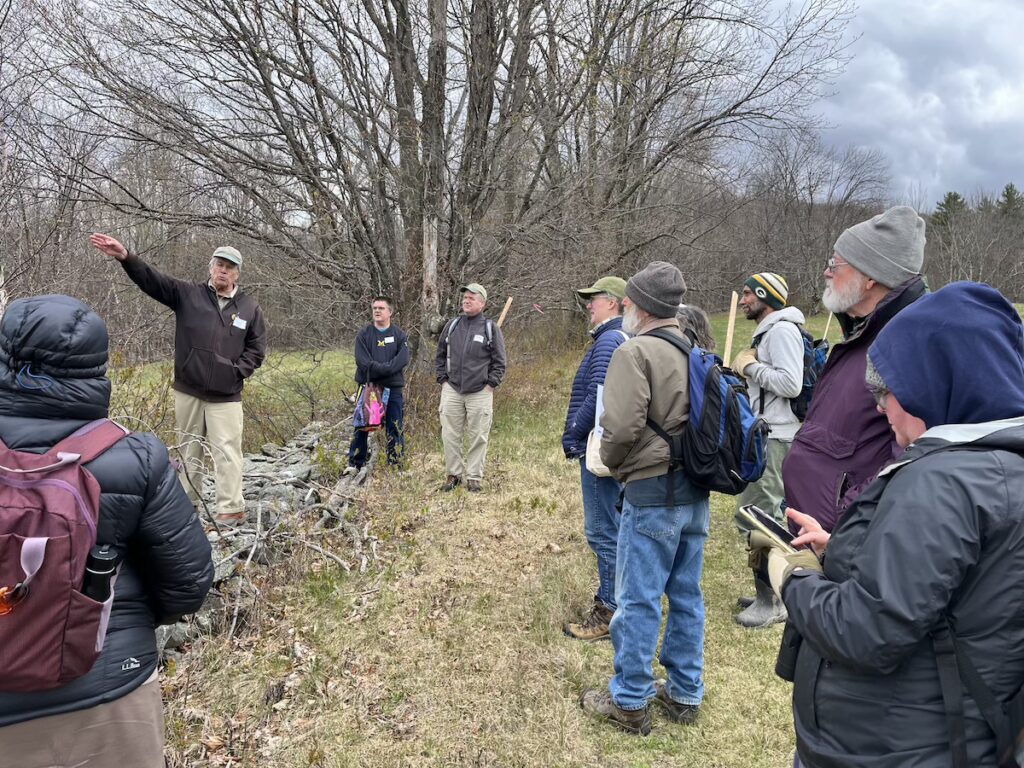
For the four core training sessions, we grouped the benchmarks to cover four key areas of forest health—biological diversity, forest structure, buffers for streams and other sensitive habitats, and the forest access path network and its associated erosion control.
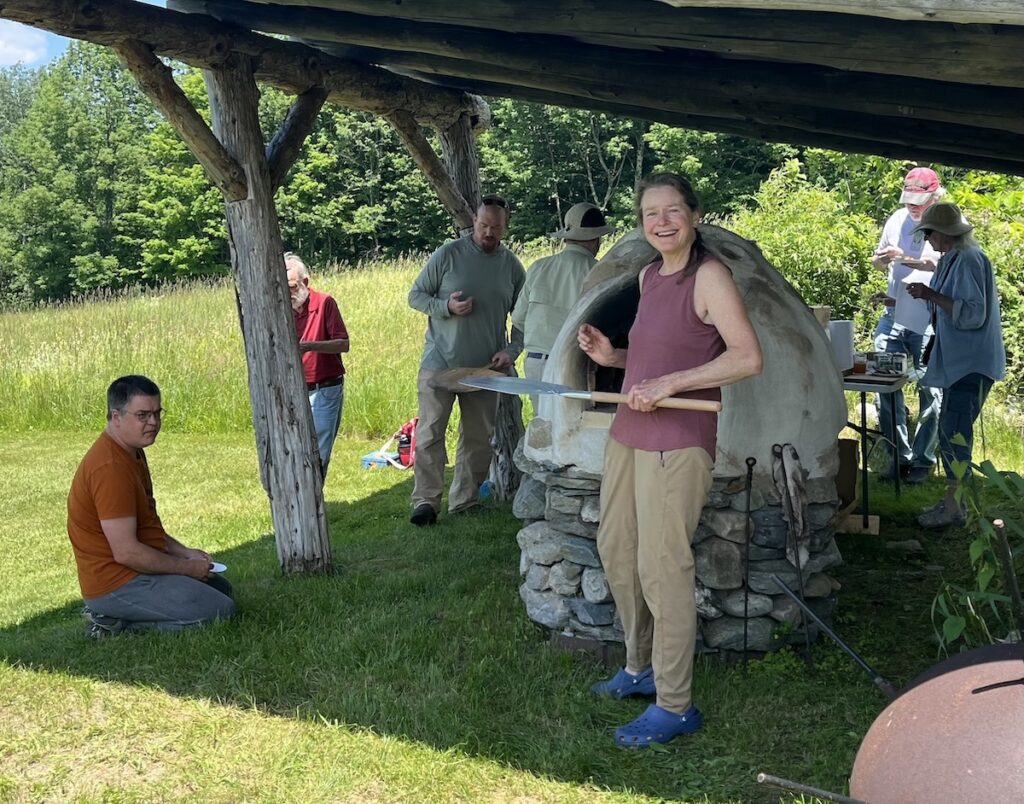
During our final session, students each gave a short presentation about some aspect of their own forest that particularly caught their interest and imagination. For lunch, we cooked up pizzas in the Wells Farm earth oven, with toppings the students had brought.
Importantly, students also gave detailed feedback about the course and the potential for the self-guided Family Forest Health Check, with an associated tool kit, as an empowering resource for landowners.
The biggest takeaway from their feedback is that the written instructions and information in the Family Forest Health Check aren’t enough for successful self-guided learning and action. Students suggested that, especially in this day and age, pictures and—even better—short videos could reinforce and/or replace step-by-step instructions. Most students felt that the in-person teaching was an essential part of their learning process. Because in-person instruction is very time consuming and reaches only the small number of students enrolled in the course, our hope is that good videos will fill in for face-to-face instruction.
Students also pointed out many ways to improve the guidebook itself, and we’ll be working on those this winter. The Family Forest Health Check is a work in process, but we encourage you to take a look and see for yourself. We’ll keep updating it, and we welcome your input. We likely will not create the videos until next spring, but will keep you posted on the progress.