Field cameras glimpsed many wetland animals during a recent study on VFF land—Can you identify them?
It’s easy to get to know the plants in your forest, since they stay put for close observation. But forest wildlife can be mighty tricky to spot and identify. That’s why we were thrilled to welcome a 6-month wildlife monitoring project on our recently acquired Commoner’s Return parcel in Bristol and Monkton. From June to November, 2025, field cameras around the periphery of a large wetland on that land captured images of the wildlife that crossed their paths. We’re thrilled to glimpse some of our new neighbors in the resulting photos and to share some of those images with you.
In the monitoring project, researchers Molly Parren and Luke Groff from Vermont’s Department of Fish and Wildlife set up eight monitoring sites around the wetland. At each site, silt fencing guided animals to a 7-gallon bucket with an entrance and exit hole cut into it. As animals passed through the bucket, a camera snapped their pictures.
An important note, before we get to the Who’s Who: Remember that if you spot a reptile or amphibian in the wild, you can report your observation to the Vermont Reptile and Amphibian Atlas (https://www.vtherpatlas.org/). It is a fantastic community-science tool for monitoring species across the state and for discovering new populations.
Wetland Who’s Who–how many do you recognize?
Here are just a few of the wild community members at VFF’s Commoner’s Return. See if you can identify them.
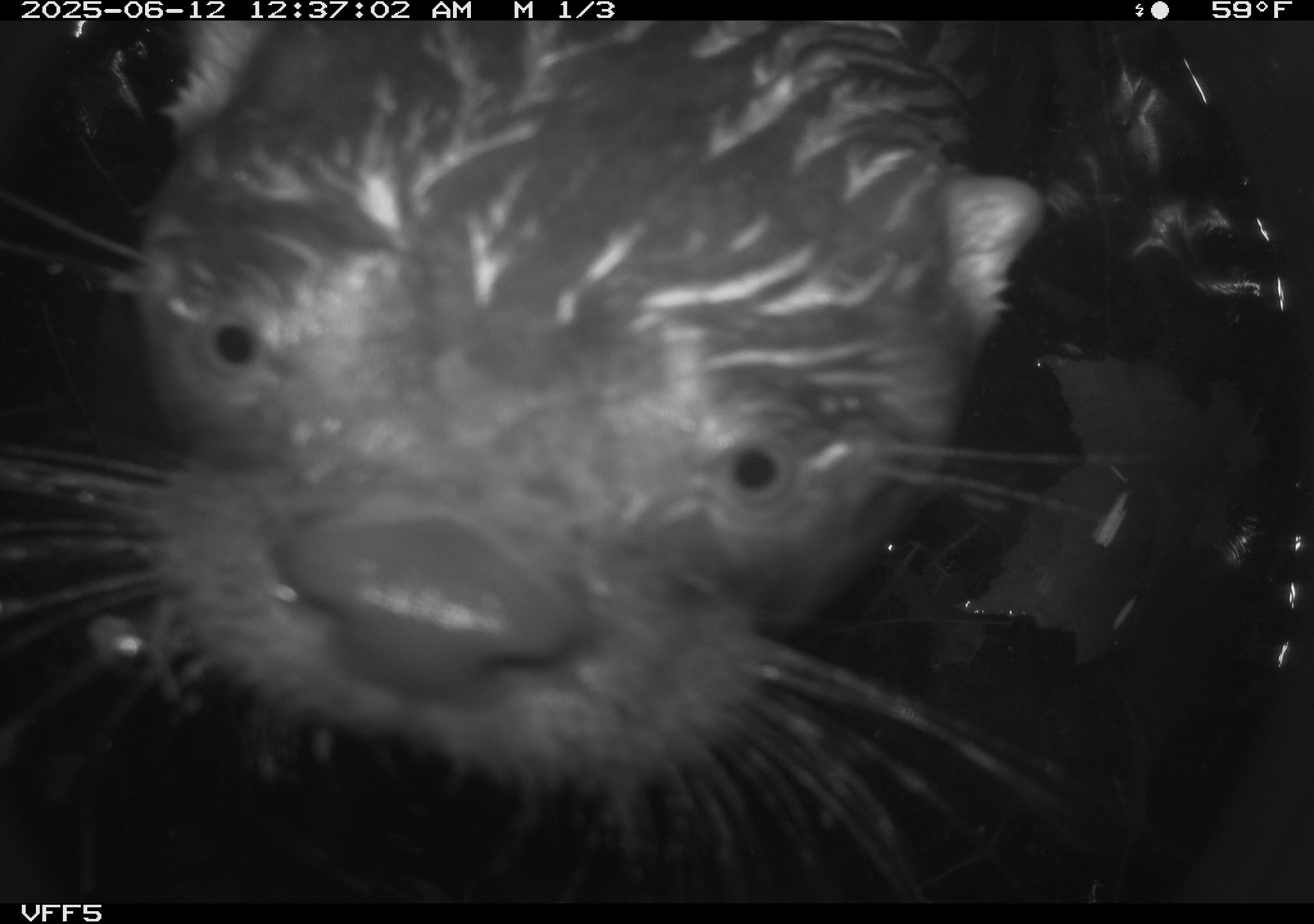
Neighbor #1. This carnivore is supremely adapted to life in and around water. Able to submerge for four minutes and swim a quarter mile on a single breath, this mammal undulates its long, muscular body to move through the water. Dense fur and a layer of fat insulate it from cold. Equipped with nimble, webbed feet and a rudder-like tail—plus excellent hearing, underwater vision, and sense of smell—this animal hunts for fish, frogs, turtles, snails, mussels, crayfish, and worms. Clean water habitat is essential for this member of the weasel family.
Did you guess?
Meet river otter, Lutra canadensis.
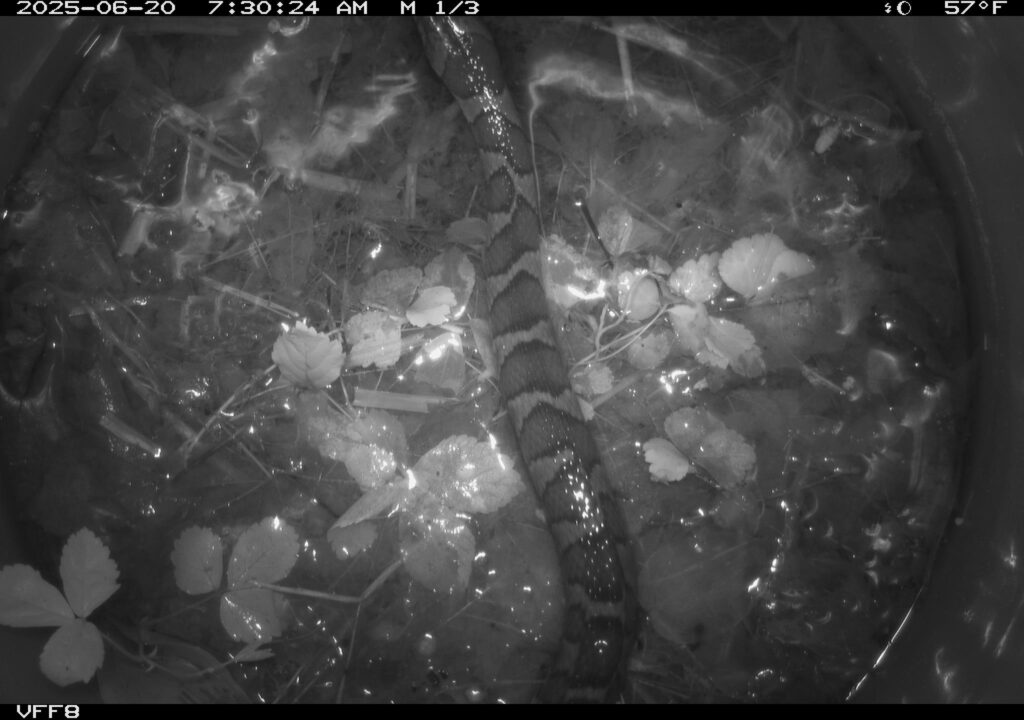
Neighbor #2. If this photo showed color, you’d see reddish-brown blotches on a cream background on the skin of this wetland community member. If you could see the belly, you’d see beautiful red crescents on a white or yellow background. If caught and handled, this animal will likely defend itself but is not aggressive if left alone. This reptile lives in lowland shallow wetlands with emergent vegetation and nearby rocks for basking. In Vermont, they’re mostly found in the Champlain Valley. An excellent swimmer, this animal eats fish and amphibians. Females give birth to live young (rather than laying eggs) in late summer or early fall. Because members of this animal’s genus are long-lived top predators in their aquatic habitat, they can accumulate contaminants like mercury and PFAS. Clean, high-quality aquatic habitats like the Commoner’s Return wetland are exactly what they need.
Did you guess?
Meet Common Watersnake, Nerodia sipedon.
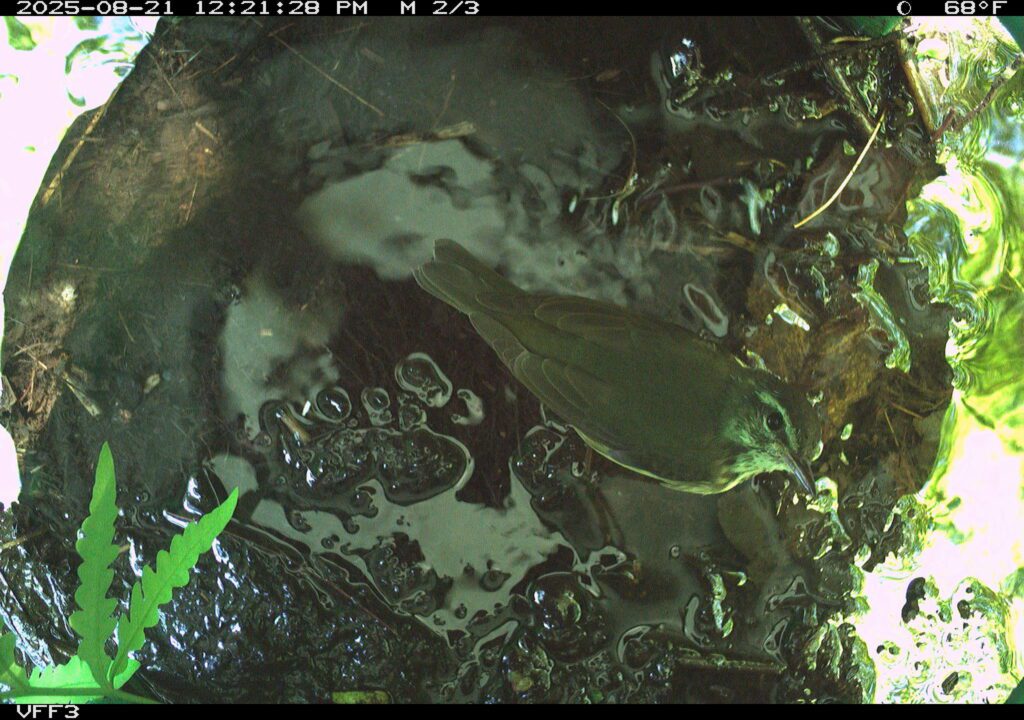
Neighbor #3. Unlike other most other members of its family, this wetland community member doesn’t forage in the forest canopy. Instead, this animal hunts for aquatic insects and small salamanders on the saturated wetland soil. If you are lucky enough to spy one, a great identifying feature (in addition to that bold eye strip and streaky belly) is its habit of bobbing up and down as it forages—a lot like a solitary sandpiper. Since you’re more likely to hear than see it, you can learn its beautiful song on the Cornell Lab of Ornithology’s All About Birds website.
Did you guess?
Meet Northern Waterthrush, Parkesia noveboracensis (member of the Parulidae family, New World warblers)

Neighbor #4. With the long, tubular body that’s a hallmark of all members of its family, this small predator ventures into wetlands, forests, and fields as it hunts. On the menu? Voles, shrews, cottontail rabbits, rats, chipmunks, nesting birds, fish, and insects. In summer, they also eat fruit and berries. Super-cool fact? The female’s gestation period (amount of time from egg fertilization to birth) is the same as a human’s—280 days—which is pretty surprising, given her small body size. That’s because of what’s called delayed implantation. Though this animal mates in late spring, the fertilized egg doesn’t implant and start to develop in the uterus until the following spring. Scientists believe this allows the female to give birth when environmental conditions are best. As with other top carnivores, clean water habitat is critical for survival, since they’re susceptible to accumulating toxins.
Did you guess?
Meet short-tailed weasel (also called ermine), Mustela richardsonii.
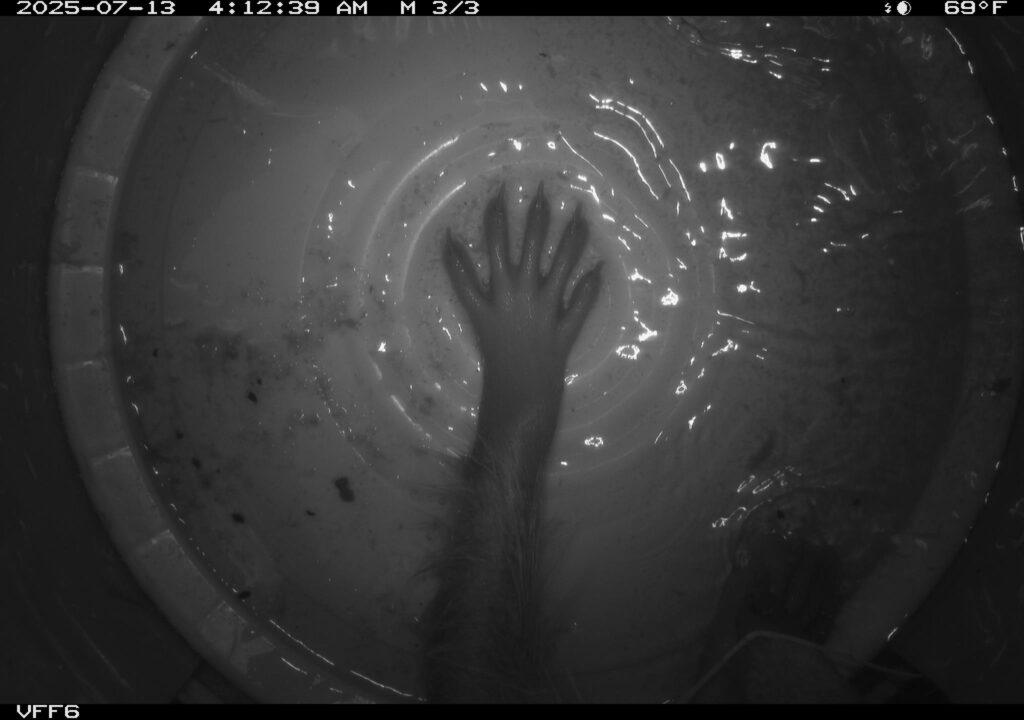
Neighbor #5. That five-fingered hand is shaped so much like ours, though it’s a whole lot smaller. You’ll often see its precise tracks pressed into the muddy ground around a wetland or stream. That hand belongs to a nimble, adaptable, inquisitive, intelligent omnivore who has adapted well to living alongside humans. This mammal lives anywhere that offers access to water, from hollow trees to attics. The Vermont Department of Fish and Wildlife refers to them as “optivores”—an evocative term that points to their opportunistic feeding on whatever comes their way, including waterfowl, birds, mammals, insects, crayfish, wild grains, fruit, carrion, and picnic basket contents.
Did you guess?
Meet raccoon (Procyon lotor)
Have you met these other wild wetland neighbors?
Here are several other wetland community members whose images were captured by the remote cameras as they went about their wetland life. Scroll to the end of the story for a list of their identities:
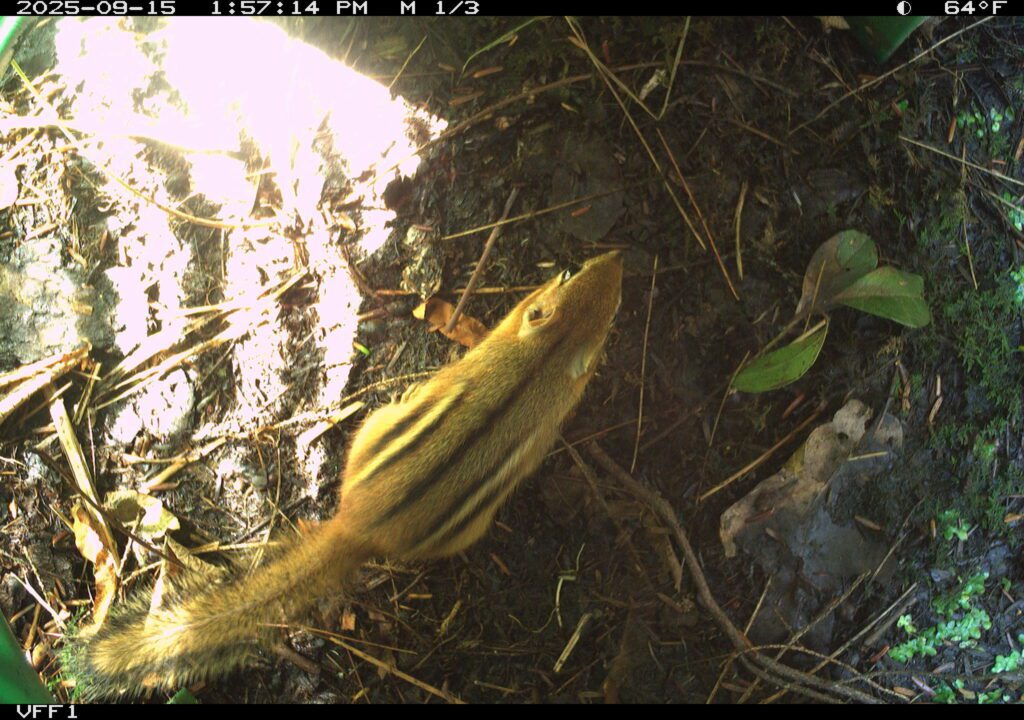
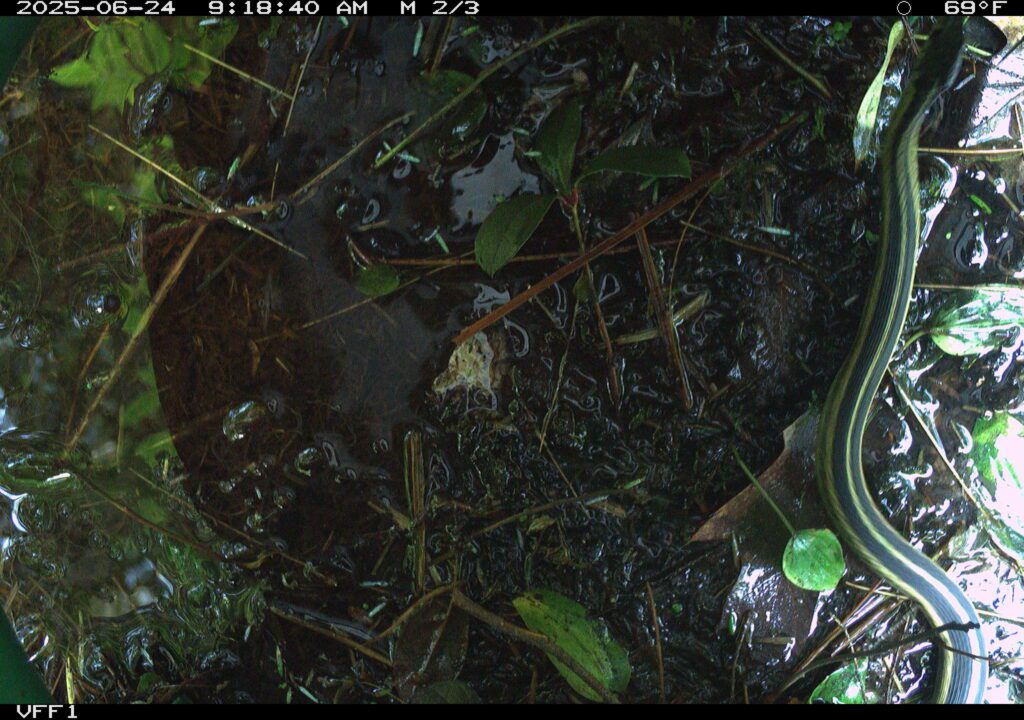

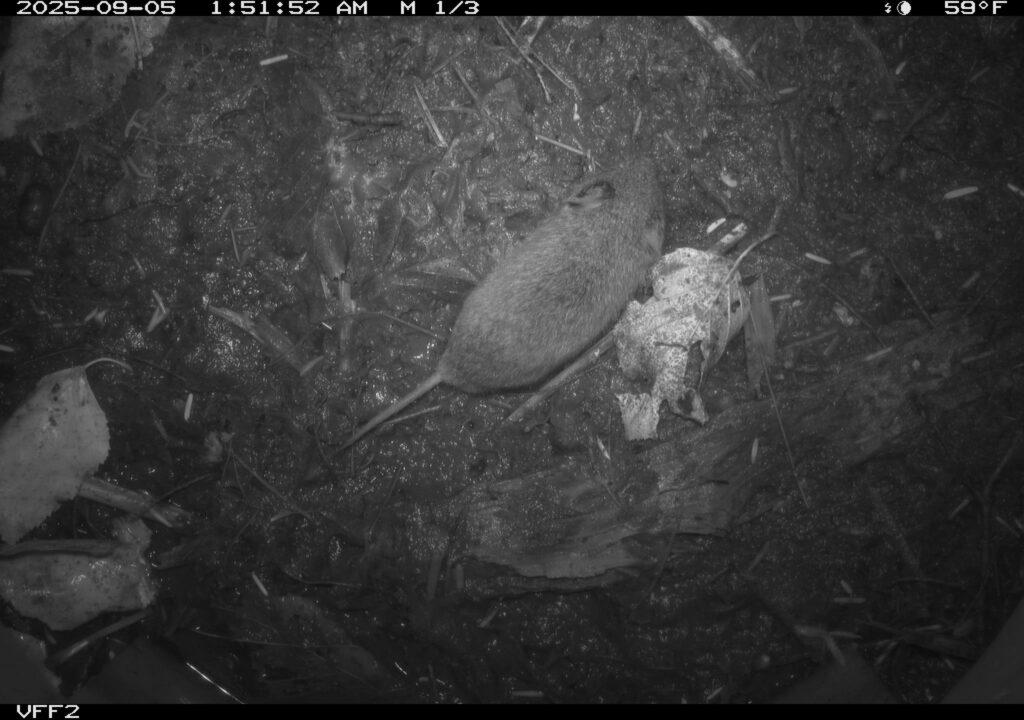

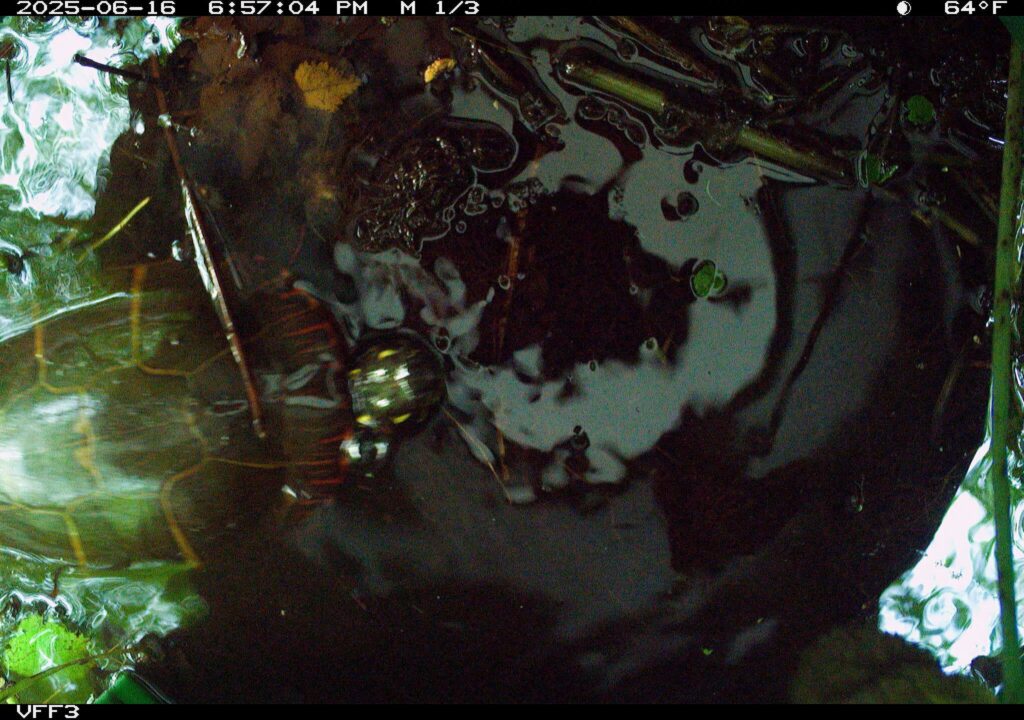
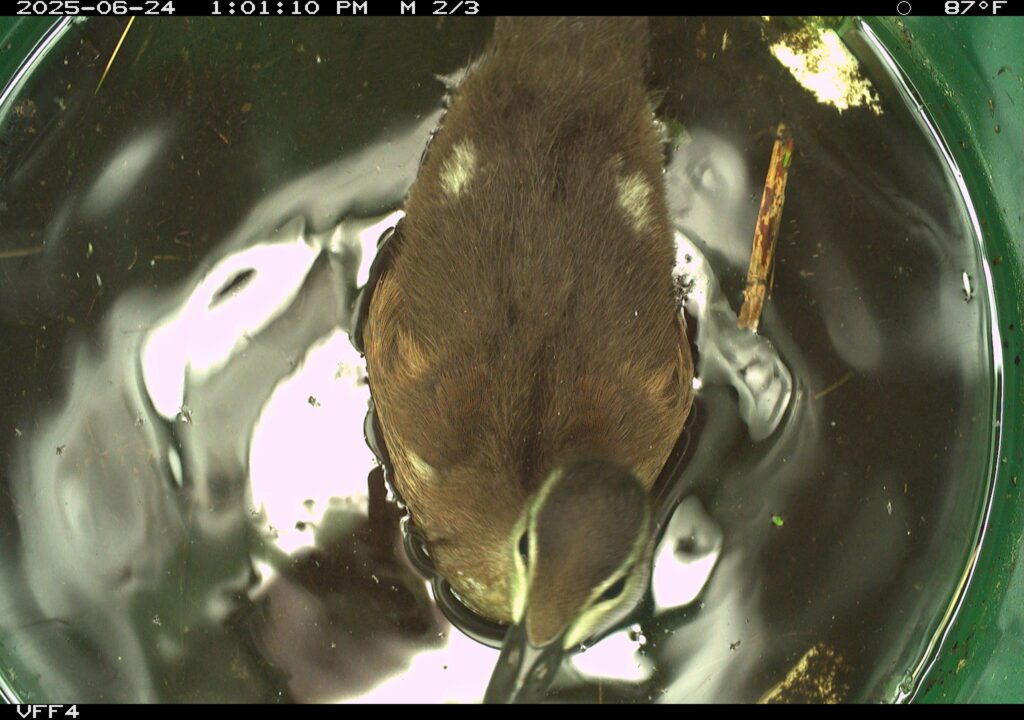
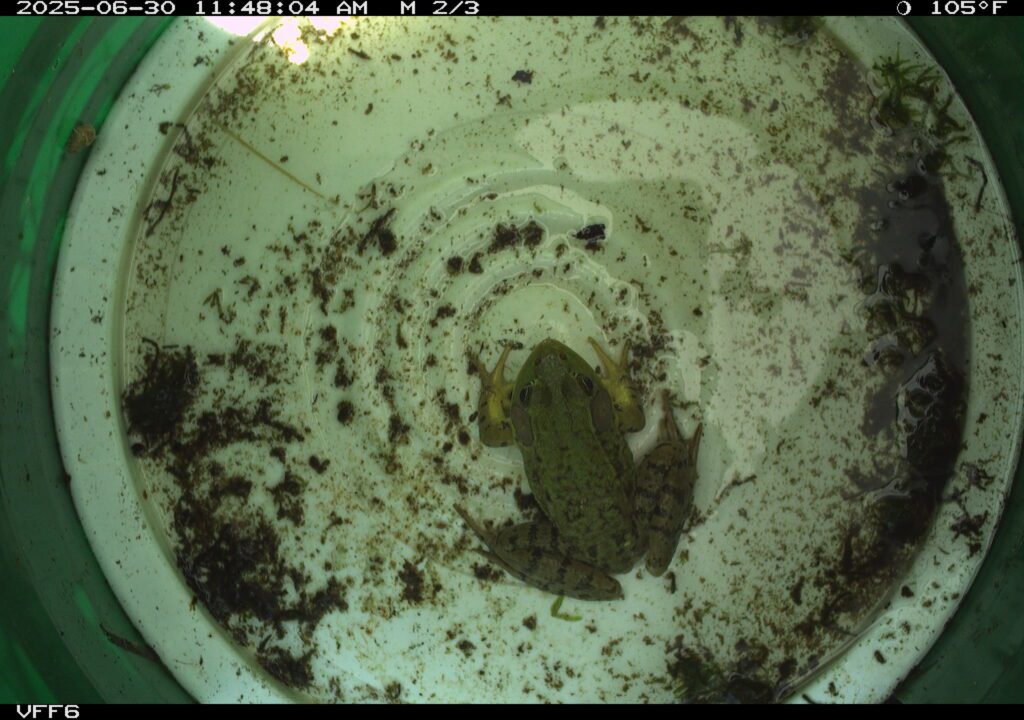

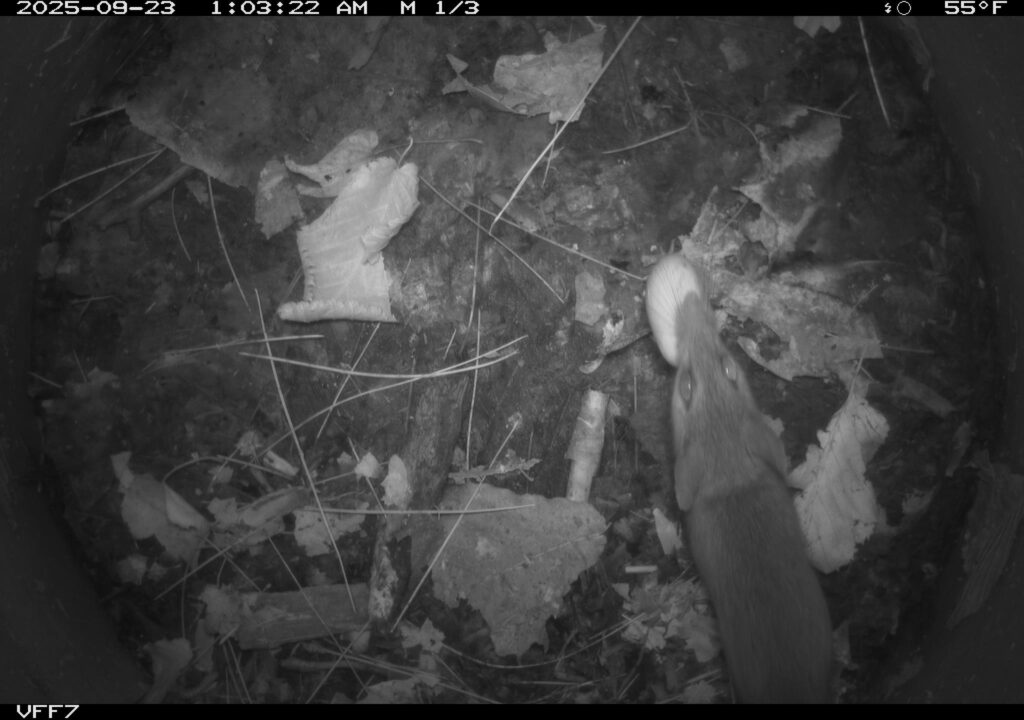

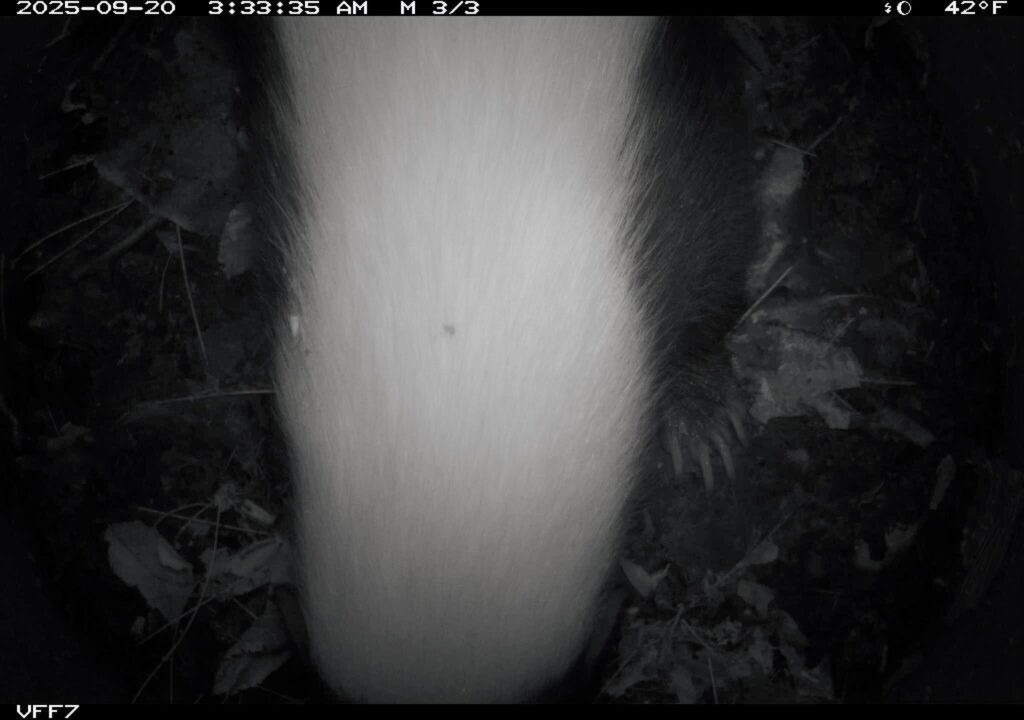
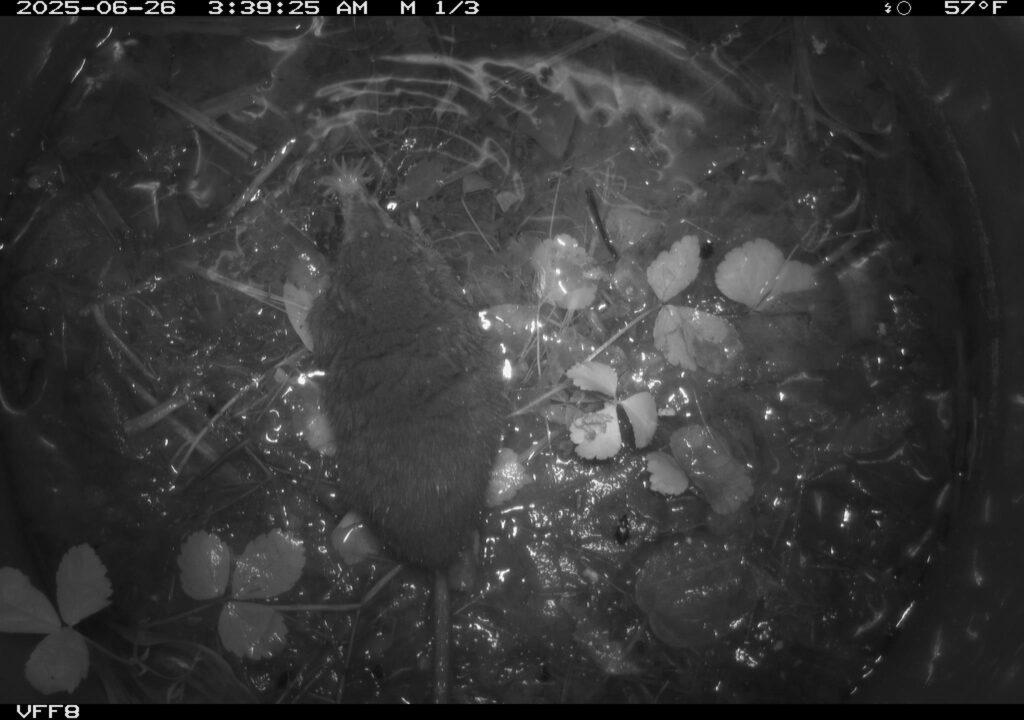
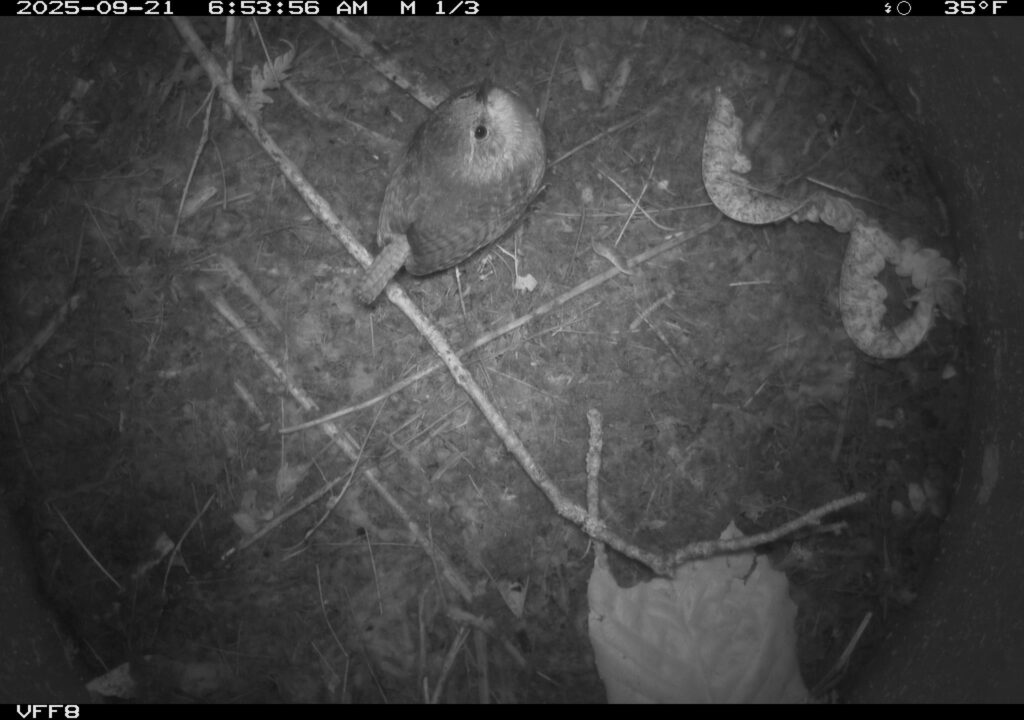
#6: Eastern chipmunk
#7: Common gartersnake
#8: Jumping mouse
#9: Vole (species not determined)
#10: Muskrat
#11: Painted turtle
#12: Mallard duckling
#13: Green frog
#14: Bullfrog
#15: Deer mouse with acorn
#16: Red-backed salamander
#17: Striped skunk
#18: Star-nosed mole
#19: Winter wren