Bird-Friendly Window Solutions
By Sandra Murphy
VFF Forest Community Outreach
At Vermont Family Forests, we devote a lot of time to sharing ideas and practices for maintaining healthy forest habitats that support healthy populations of native wildlife species, including many of the more than 260 species of birds that live in Vermont. But today I’d like to step out of the forest and into the backyard to look at practices that protect those birds as they migrate to and from those welcoming forest habitats and move about their daily lives among human habitations. Every year, window collisions kill an estimated one billion birds in the United States alone, as documented in a recent (2024) study conducted by scientists at American Bird Conservancy (ABC), Fordham University, NYC Bird Alliance, and Stony Brook University.
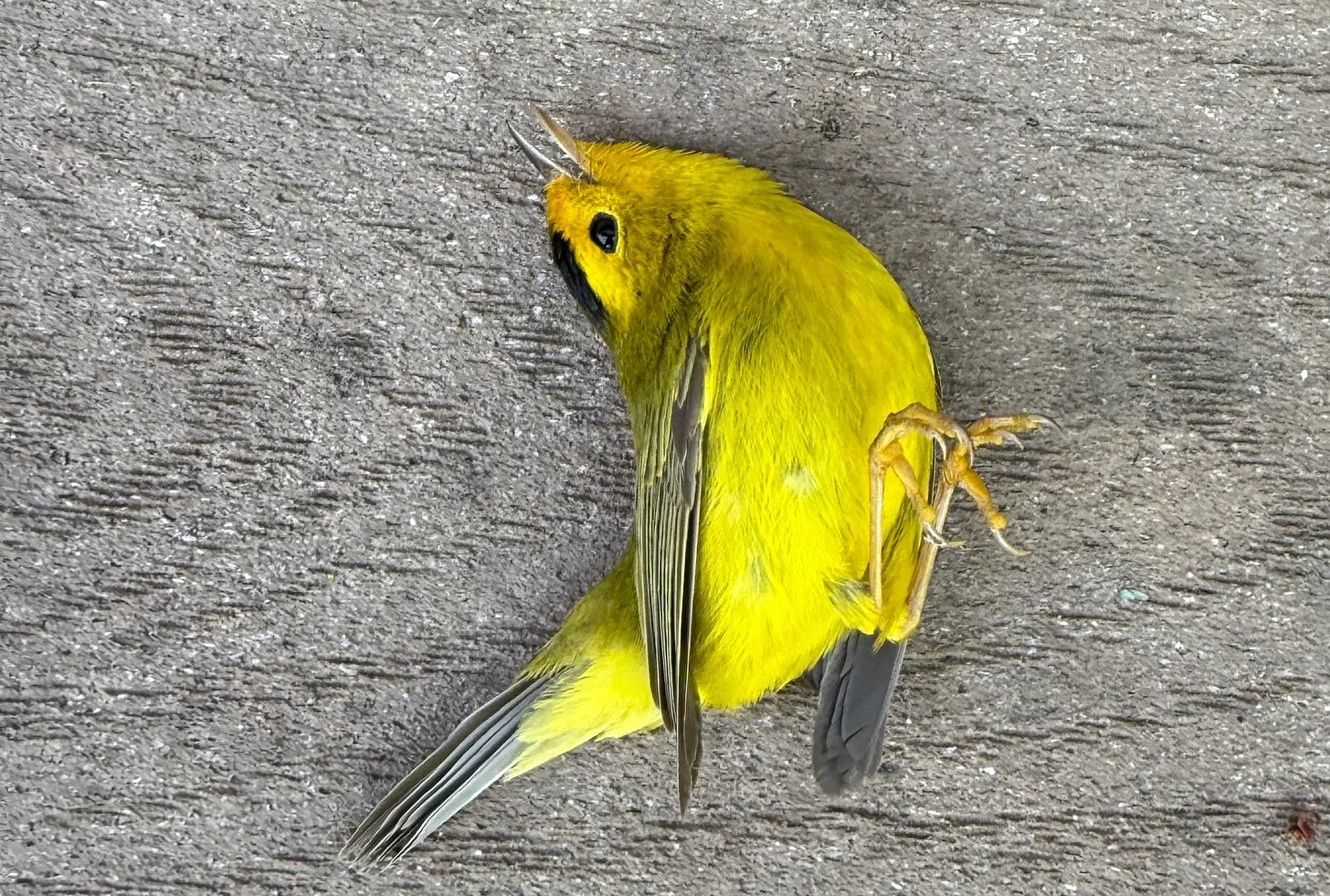
A dear friend from Oregon, Marina Richie, recently shared her experience of the collision of two Wilson’s warblers into the picture window of a house where she was staying for a writing retreat. Her story about the collision and the follow-up efforts to make the windows visible to birds inspired this post.
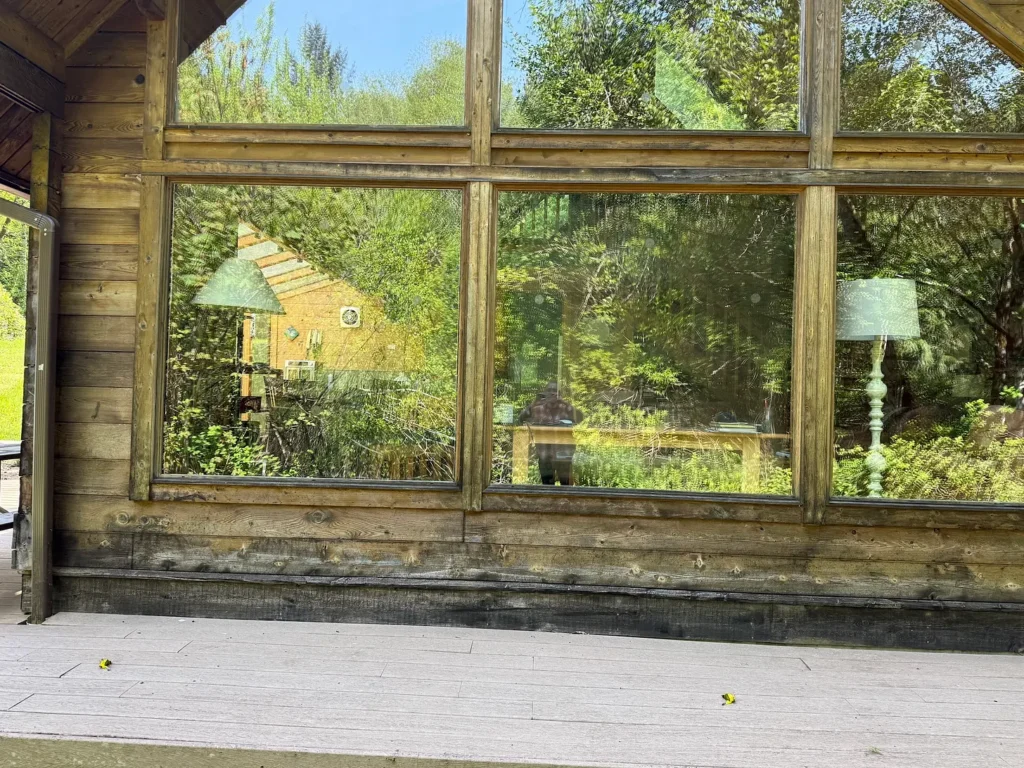
Birds collide with windows because those windows reflect back the natural environment of trees and sky, tricking birds into thinking that they’re entering wide-open space. Sticking a few decals on the insides of your windows might feel better than doing nothing at all, but it does little to prevent collisions. The great news, though, is that there are many effective options. In this story, I’ll share a few very effective practices I know about, and I hope you’ll get back to us (info@familyforests.org) with any of your own suggestions.
- Year-round Screens on Double-hung Windows
Double-hung windows—if their screens are left in place year-round—are inherently bird-friendly, since the screens are located on the exterior side of the window glass. If a bird hits a window screen, chances are good that the bird will bounce off and fly away (A large bird like a ruffed grouse will likely pierce the screen and strike the window glass.) Contrast that with casement or awning windows, in which the screens are located on the interior side of the window and cannot cushion a collision. If you have double-hung windows, don’t put the screens away in the winter—leave them up and know that they’re fending off bird mortality throughout the year.
- Acopian Bird Savers
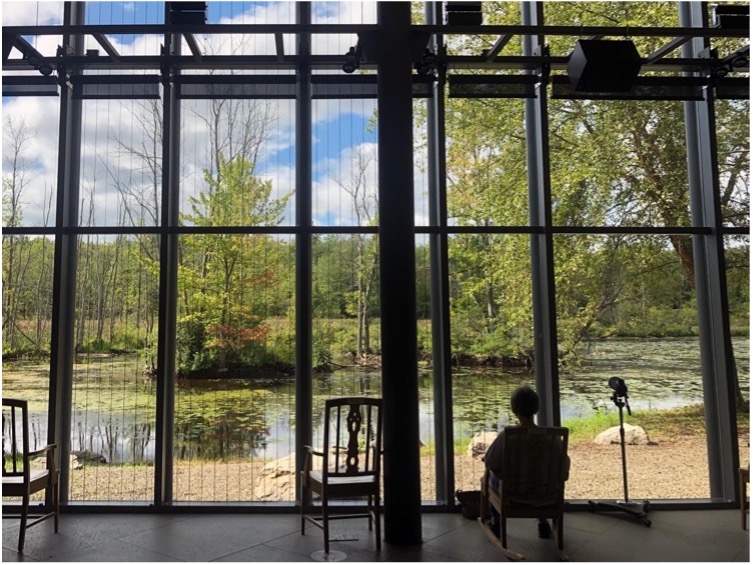
A great, low-cost, low-tech, do-it-yourself window treatment is Acopian Bird Savers. I have seen them in action in both private homes and public buildings. The Cornell Lab of Ornithology, the country’s leading bird research and community science organization, uses them on their visitor center (photo below) and highly recommends them. The system consists of parallel strands of parachute cord (available at your local hardware store), hung 4” apart. Such close spacing is critical for this and any other window treatment. The cords can either hang loose at the bottom or can be attached to easy-release trim pieces at the window base, facilitating window cleaning. Though they’re the most visible of the options listed here, they are quite attractive, especially since they’re a reminder of their uplifting purpose—saving birds. Visit birdsavers.com for DIY instructions or to order some ready-made.
We’re in the process of installing these on a picture window at VFF’s Anderson Wells Farm. We’re planning to complete it before the Woodwinds in the Middle Barn gathering on July 16, so if you’re planning to come to that, you can see them in action.
- Feather Friendly window film
The Toronto-based Feather Friendly company makes two very effective products. They’re more expensive than the Acopian Bird Savers, but are less visually obtrusive. Their products first came to my attention via news of the infamous bird-collision windows of the McCormick Place Convention Center in Chicago. Since the building was constructed in 1960, thousands of migratory songbirds have died each year in collisions with the building’s more than 120,000 square feet of surface glass. On a single night in 2023, the building’s windows claimed more than 1000 songbirds. That terrible night sparked action, and in 2024, the building’s windows were treated with Feather Friendly window film, which features dots on a two-inch grid, applied to the outside of the windows. From the inside, the dots are barely visible, but from the outside, they create a visual field that effectively deters birds. At McCormick Park, bird mortality immediately dropped by more than 95%.
Extra reading about bird-friendly window options:
Cornell Lab of Ornithology: Why Birds Hit Windows—And How You Can Help Prevent It
US Fish & Wildlife Service: Threats to Birds: Collisions (Buildings & Glass)